Today, I was vacuuming my house when I found myself learning something new about a subject I know far more intimately than I would like:
Pain.
It is September 30th, the National Day for Truth and Reconciliation here in Canada. I was home, earbuds in, vacuum in hand, letting my podcast playlist decide what I would listen to next.
Up popped a new episode of TED Health: “What Is Pain?” with Rachel Zoffness, a scientist and psychologist who studies pain, speaking with host Dr. Shoshana Ungerleider.
I thought I would listen while I vacuumed.
Instead, I found myself really listening.
Because when you have lived with chronic pain for almost two decades, a conversation about what pain actually is gets your attention.
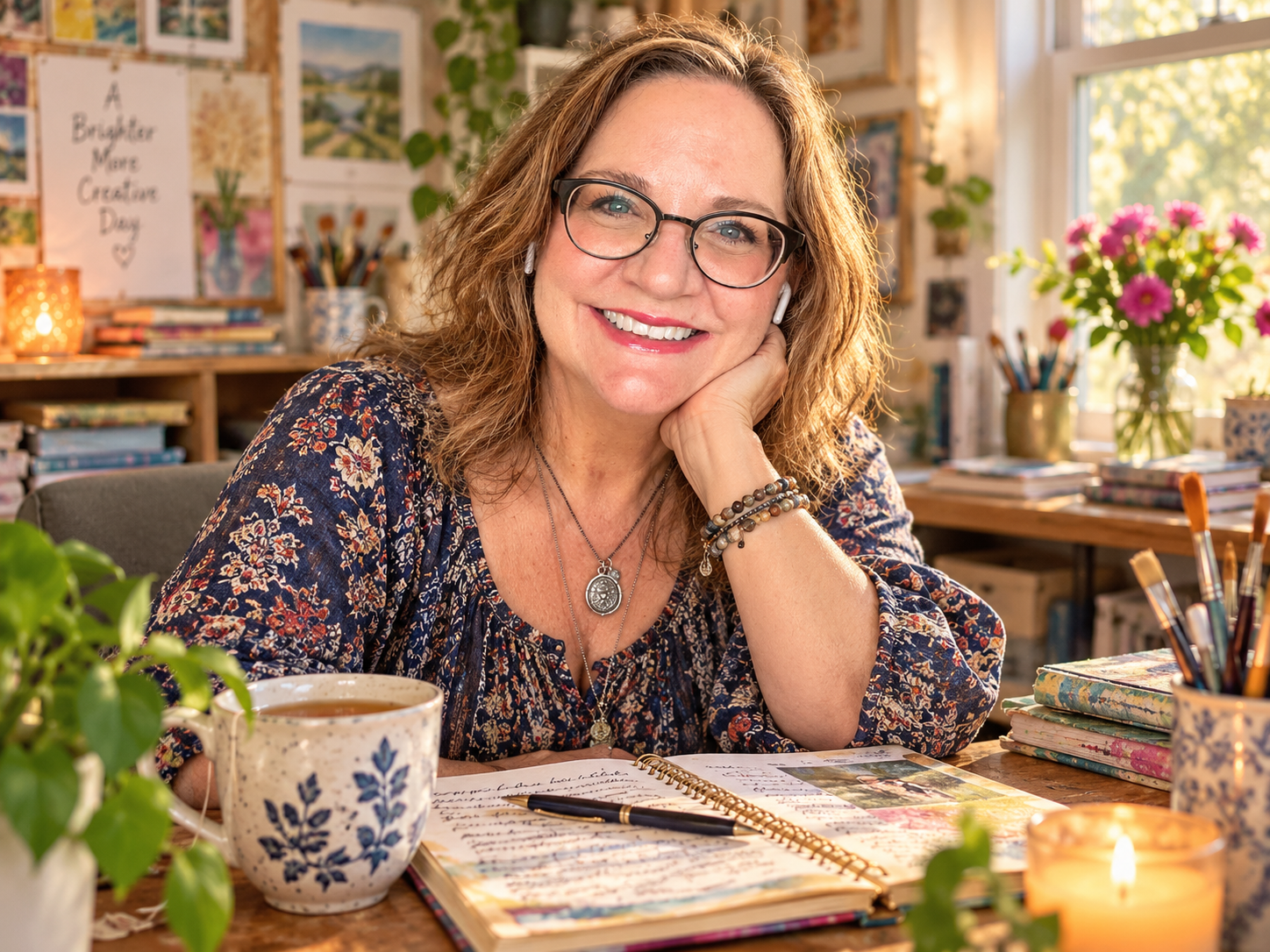
Pain has been part of my life for almost 20 years
I have an osteophyte — a bone growth — on my L5 that interferes with the nerves coming out of my spine.
In very simple Barb-language?
Nerves and bone do not play nicely together.
There have been periods when the pain in my lower back was so severe that something as small as taking a breath — the movement created simply by inhaling — could cause immediate pain that stopped me in my tracks.
Eventually, I underwent surgery to remove the growth.
I remember speaking with my neurosurgeon about the risks. His concern wasn't that I would become paralyzed. The growth was extremely close — approximately one millimetre — to a major artery. If that artery were damaged during surgery, the outcome could be catastrophic.
And I still said yes.
That probably tells you something about how much pain I was living with.
My quality of life had become so poor that I was willing to accept a significant surgical risk for the possibility of relief.
The year following surgery was difficult.
Recovery hurt.
Something also didn't seem right.
Eventually, I learned why.
The osteophyte had grown back.
And it was larger than before.
I can't adequately describe the disappointment I felt when I heard that.
Since then, medications for nerve pain, muscle relaxants, pain medications and other treatments have helped me function.
But chronic pain has altered my life.
It has changed what I can do, how long I can do it, how I move and sometimes how I plan something as ordinary as a day.
I am not sharing all of this to impress you.
I am sharing it to impress upon you that if you live with pain — I understand.
Not your exact pain.
No one can completely know another person's experience.
But I understand what it is like when pain stops being a temporary visitor and starts taking up residence in your life.
And perhaps that is why this podcast caught me so completely.
Wait...pain comes from the brain?
One of the ideas Rachel Zoffness talks about is that the brain is central to our experience of pain.
Now, I'll admit something.
For someone like me, whose MRI can essentially say, Well Barb, there is a chunk of bone sitting where a chunk of bone really shouldn't be sitting, phrases like “pain comes from the brain” can initially make me bristle a little.
Because my pain has a very real physical component.
There is bone.
There are nerves.
There is a spine.
There is a long medical history behind it.
So let me make this really clear:
Saying that the brain plays a central role in pain does NOT mean the pain is imaginary.
It does not mean it is “all in your head.”
It does not mean there isn't an injury, illness or physical condition contributing to it.
And it certainly doesn't mean someone can simply think positively enough to make chronic pain disappear.
What I learned more about today is something called the biopsychosocial model of pain.
That is a very large word for an idea that actually makes a lot of sense.
Our experience of pain can be influenced by three interconnected areas:
BIO — our body.
Injury. Illness. Inflammation. Nerves. Genetics. Our nervous system. Physical conditions.
PSYCHO — our thoughts and emotions.
Stress. Anxiety. Fear. Memories. Mood. How safe or threatened we feel.
SOCIAL — the world around us.
Relationships. Loneliness. Support. Work. Finances. Our environment. Whether we feel understood and believed.
All of those things can interact with one another.
And that means pain isn't always as simple as:
Something is damaged = this exact amount of pain.
Pain is much more complicated than that.
And I find that fascinating.
Four things I took away from this conversation
1. Pain is real — even when emotions affect it
This may have been the most important point for me.
Stress and anxiety can amplify our experience of pain.
But that doesn't make the pain psychological or imaginary.
Think of it more like a volume dial.
The body may already be sending danger signals. Stress, exhaustion, fear and anxiety can sometimes turn the volume higher.
That distinction matters.
Because far too many people with chronic illness and chronic pain already know what it feels like not to be believed.
I don't think we need one more person telling us, “It's just stress.”
Instead, perhaps the question becomes:
If stress is one ingredient in my pain experience, is there something I can do to reduce that particular ingredient?
Not cure everything.
Not blame myself.
Just turn one dial if I can.
2. Pain and physical damage aren't always perfectly matched
This was another interesting idea.
Pain is our body's protective system. It alerts us that something may be wrong and helps us protect ourselves.
Touch a hot stove and pain gets your hand out of there rather quickly.
Break a bone and pain encourages you not to keep running on it.
Thank you, pain.
Message received.
But with persistent or chronic pain, our nervous system can become more complicated.
The amount of pain a person experiences doesn't always correspond perfectly with the amount of visible tissue damage.
That doesn't mean we should ignore new pain or stop seeking medical care.
It means our nervous systems are much more sophisticated than a simple on/off switch.
And the more I learn about that, the more interested I become in what else might help my nervous system feel supported and safe.
3. Understanding pain can give us more tools
This may be what I appreciated most about the conversation.
Understanding pain doesn't magically eliminate it.
But knowledge can expand the number of tools available to us.
Maybe medication remains one of those tools.
Maybe surgery or medical treatment is necessary.
And maybe we can add other tools alongside them:
sleep.
movement appropriate for our bodies.
pacing ourselves.
reducing stress.
breathing.
relaxation.
connection.
therapy.
creative practices.
understanding our nervous system.
learning when our bodies need activity and when they need rest.
It doesn't have to be either/or.
It can be both/and.
And as someone who believes strongly in bringing art and wellness together, that really resonated with me.
4. Small choices still matter
This is where the podcast became personal again.
Because while I can't control everything happening inside my spine, I started thinking about what I can influence.
And two things came up immediately.
Sleep.
Oh Barb.
You knew this one was coming.
That means getting off social media earlier rather than suddenly realizing I have been scrolling far too late into the evening.
And the second?
Movement.
I want to resume my exercise program, gently and appropriately for my body.
Not because I believe getting eight hours of sleep and exercising will magically make a bone growth disappear.
They won't.
But because these are things I can do to support the body I am living in.
And that matters to me.
This isn't about doing everything “right”
There is something else I want to say — especially to my fellow women living with chronic illness, chronic conditions, pain or grief.
Please don't turn any of this into another list of things you are failing to do.
You know the list.
I should exercise more.
I should sleep better.
I should meditate.
I should drink more water.
I should manage my stress.
I should eat better.
I should...
No.
That isn't what I took from this conversation.
I heard something different.
I heard:
There may be more ways to support yourself than you realized.
That's a very different message.
It gives us curiosity instead of judgement.
Possibility instead of pressure.
Maybe today isn't the day you exercise.
Maybe today the most supportive thing you can do for your nervous system is crawl underneath a blanket and rest.
Maybe you call a friend.
Maybe you sit outside for ten minutes.
Maybe you turn off the news.
Maybe you breathe.
Maybe you make art.
Maybe you put paint on paper without caring what it looks like.
Maybe you go to bed half an hour earlier.
Maybe you ask your doctor another question.
Small things count.
Take what helps. Leave the rest.
I love learning.
I love books, podcasts, courses, research and conversations that make me look at something I thought I understood and realize:
Ohhhh...there's more here.
But I've also learned that I don't have to accept everything I hear as gospel.
My approach has become:
Take what helps. Explore what resonates. Leave the rest.
That is exactly what I am doing with this podcast.
I don't believe I listened to a 37-minute podcast and suddenly discovered the answer to almost twenty years of chronic pain.
I didn't.
But I learned something.
I became curious.
I started thinking differently about a few pieces of my own pain-management puzzle.
And I was reminded that even after living with something for almost two decades, there may still be something new to learn.
I find hope in that.
Maybe listen while you do something ordinary
If you're living with chronic pain, persistent pain or a condition that causes pain, I encourage you to listen to “What Is Pain?” with Rachel Zoffness on TED Health.
Put your earbuds in while you make art.
Listen while you fold laundry.
Take it along on a gentle walk if walking feels good for your body.
Sit with a cup of tea and simply listen.
Or do what I did...
Vacuum your house.
Look at me — learning about pain and getting the cat hair off the carpet at the same time. 😉
Although I really need a gentler replacement for “killing two birds with one stone.”
Most importantly, though, you don't need to overhaul your life after listening.
Just be curious.
And perhaps ask yourself one question:
What is one small thing I could do to care for my body a little more gently today?
For me, that might mean going to bed earlier tonight.
For you, it might look completely different.
Because when we live with chronic pain, we don't always get to choose whether pain shows up.
But perhaps understanding our pain gives us a few more choices about how we care for ourselves while it is here.
And sometimes...
one more choice can be a very powerful thing.
With love,
Barb 💗
This article shares my personal experience and what I learned from the TED Health conversation. It is for reflection and education, not medical advice. New, severe or changing pain deserves appropriate medical assessment, and treatment decisions should be made with qualified health-care professionals.
A Little More About What I Learned
If you'd like to explore the ideas further, look for:
TED Health — “What Is Pain?” with Rachel Zoffness
A conversation with Dr. Shoshana Ungerleider about how the brain, body, emotions, stress and our environment interact in the experience of pain.
National Institute of Neurological Disorders and Stroke — Pain
A helpful overview of the biopsychosocial nature of pain and approaches to pain management.
UCSF Pain Management Education — What Is Pain?
An accessible explanation of how pain involves both the brain and body and why pain and tissue damage aren't always the same thing.
#ArtHeals #MoreArtLessStress #ChronicPain #ChronicIllness #PainEducation #ArtAndWellness #SelfCompassion #LivingWithChronicPain #GentleWellness #MakeArtFeelBetter
Unleash your inner artist with the Beginner's Guide to Acrylics! Learn the basics of colour mixing, create stunning textures, and unlock your creativity. Get your copy today and start creating masterpieces!

